Noah Weber · 25 September 2026
Shifts in Publisher Strategies Amid Evolving Content Recommendation Engines
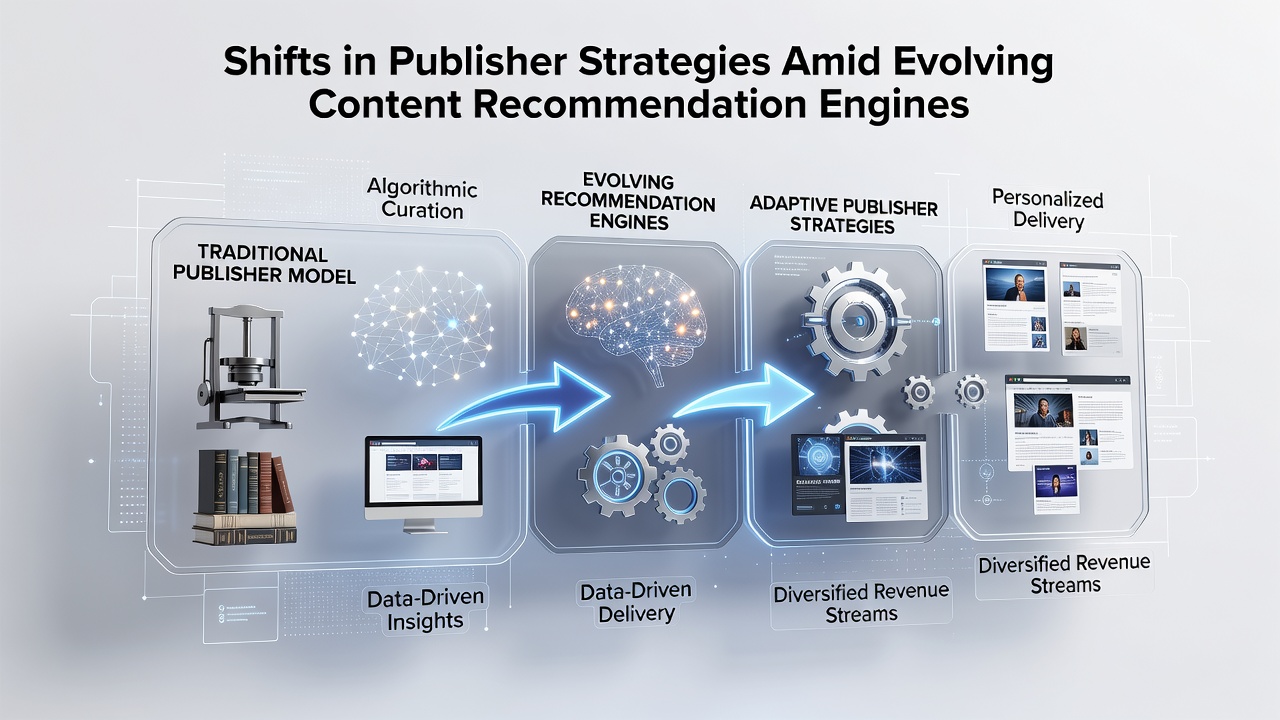
Content recommendation engines have transformed how audiences discover articles and videos, and publishers have responded by adjusting production pipelines, distribution methods, and data practices in measurable ways. These engines rely on machine learning models that analyze user behavior, engagement signals, and contextual factors to surface material across platforms and news aggregators. Researchers tracking digital media consumption note that changes in these models between 2023 and 2025 have altered referral traffic patterns for many outlets, forcing organizations to diversify beyond traditional search and social channels.
Engine Updates and Traffic Reallocation
Platform operators have rolled out successive refinements to ranking logic, including greater emphasis on first-party data, session depth, and content freshness. European Commission reports on the Digital Services Act show that transparency requirements implemented in 2024 compelled several large services to disclose how recommendation systems prioritize material, which in turn affected how publishers prepared metadata and structured stories. Meanwhile, traffic analytics from multiple regions indicate that sites emphasizing original reporting saw steadier referral volumes compared with those relying heavily on aggregated or repurposed material.
Publishers in North America and Europe began experimenting with modular content formats that algorithms could more easily parse and match to user profiles. These formats include structured data markup for key facts, topic clusters built around core themes, and shorter updates designed for push notifications. Observers at academic institutions studying media economics have documented corresponding increases in the share of editorial budgets allocated to data annotation and tagging tasks rather than long-form writing alone.
Adaptations in Content Production and Distribution
Newsrooms have introduced new workflows that integrate real-time performance signals into assignment decisions. Editors now review recommendation engine dashboards alongside traditional metrics such as page views and time on site, allowing them to identify which story angles generate sustained engagement rather than one-time clicks. This practice has become common at mid-sized outlets that lack direct access to platform algorithm teams yet must still compete for visibility in crowded feeds.
Independent publishers have formed data-sharing consortia in several countries to pool anonymized audience insights, a step that helps smaller organizations train internal models capable of predicting how specific headlines or multimedia elements will perform under current recommendation rules. Australian government communications reports highlight similar collaborative efforts among regional media companies seeking to reduce dependence on overseas platform policies.

Regulatory and Technical Pressures
New rules on automated decision-making have prompted publishers to audit how their own systems interact with external engines. In September 2026 several jurisdictions plan to enforce updated requirements around explainability of recommendations, which will require additional documentation of content labeling practices. Organizations preparing for these deadlines have already begun mapping internal taxonomies to emerging regulatory standards, ensuring that metadata remains consistent across multiple distribution points.
Technical teams have also shifted resources toward server-side rendering and edge caching configurations that improve load times, a factor that recommendation models increasingly weigh when determining whether to surface an item to users on slower connections. These infrastructure changes appear in project timelines published by media technology vendors serving both large chains and smaller digital-native outlets.
Measurement and Partnership Models
Performance evaluation has moved beyond aggregate referral numbers to include metrics such as completion rates within recommendation carousels and downstream subscription conversions. Publishers that publish detailed case studies on these metrics report that certain topic categories, particularly explanatory journalism and service-oriented pieces, maintain steadier algorithmic placement than breaking news alone. Industry research groups tracking these patterns note that outlets adjusting editorial calendars to include recurring explainers have recorded more predictable monthly referral figures.
Partnership arrangements with platform operators have evolved as well. Some publishers now negotiate direct data exchange agreements that supply first-party signals in exchange for placement guarantees within specific product surfaces. These agreements remain subject to ongoing antitrust scrutiny in multiple regions, yet they represent one documented avenue through which organizations seek greater control over distribution outcomes.
Conclusion
Publishers continue to recalibrate production, measurement, and technical practices in response to ongoing changes in content recommendation engines. Data from regulatory filings, traffic studies, and internal workflow adjustments illustrate a broad pattern of adaptation that emphasizes structured metadata, diversified distribution, and proactive compliance preparation. As new transparency mandates take effect in September 2026, further refinements to these strategies are expected across markets.